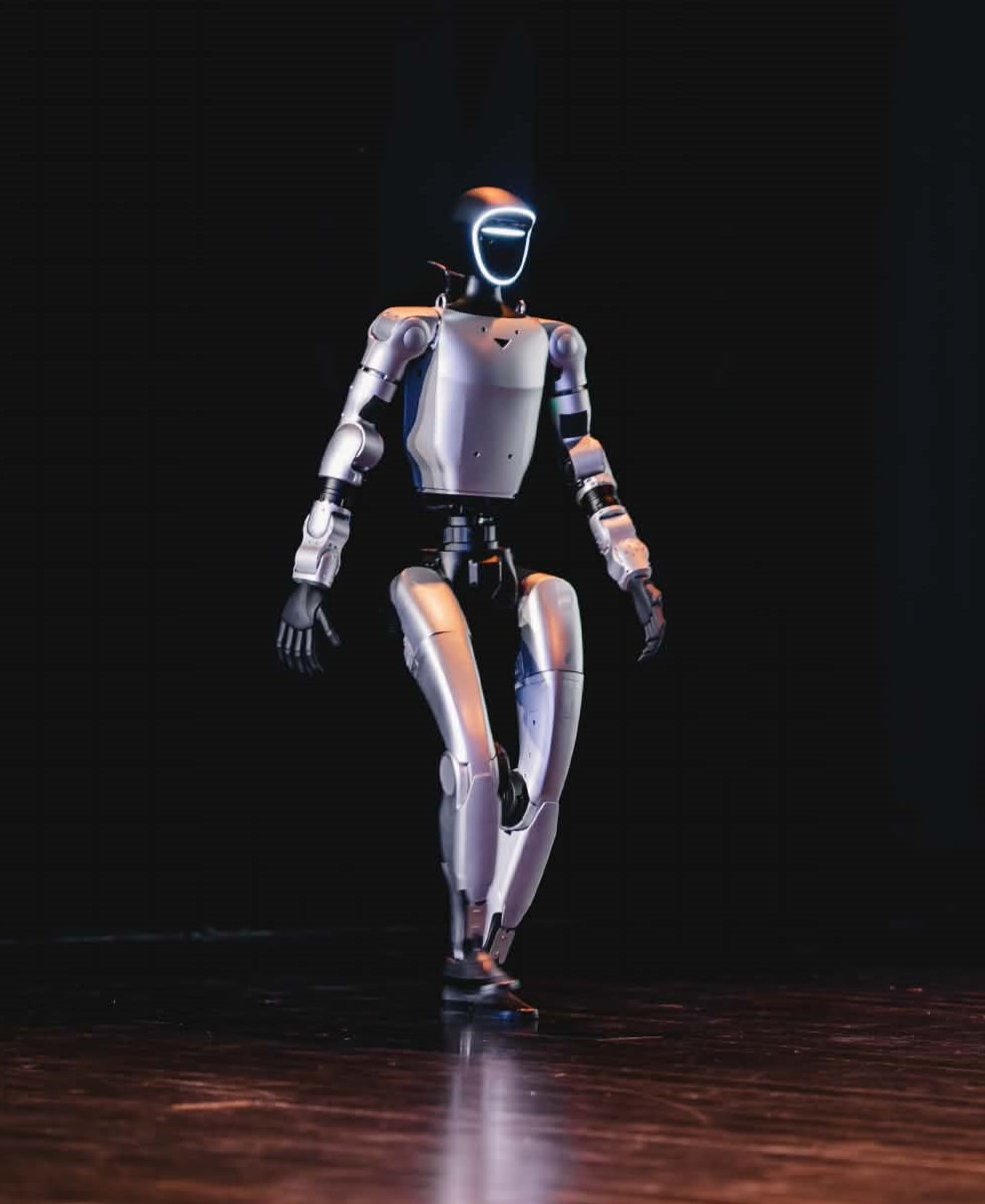
ALTAS
A Lithuanian-speaking humanoid robot librarian developed with the Jono Lankutis Public Library. Project ALTAS is named in memory of the scientist Adolfas Laimutis Telksnys.
About the project
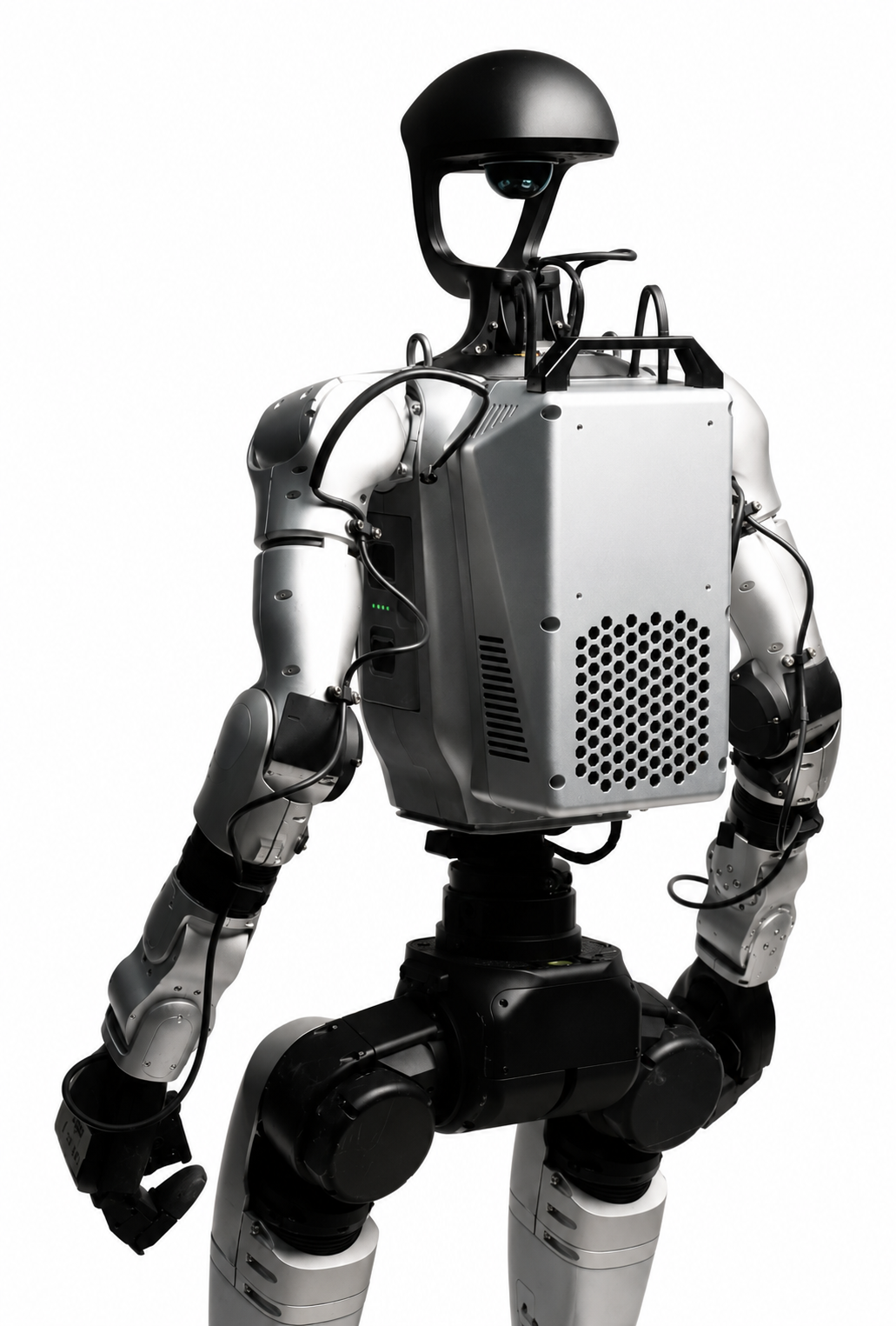
An applied robotics and artificial intelligence project to develop ALTAS, a humanoid library assistant. The project aims to explore how modern robotics, artificial intelligence and natural language technologies can be put to practical use at the Jono Lankutis Public Library of Klaipėda District Municipality. It is one of the first initiatives of its kind in Lithuania in which a humanoid robot is being designed not as a demonstration exhibit, but as a digital assistant operating in a real public space. The system is built around a humanoid robotic platform, supplemented by dedicated high-performance computing, sensor and artificial intelligence infrastructure. The system under development is intended to receive spoken requests, understand their context, find the required information and respond in natural language. The robot is also being integrated with the library’s information resources and physical environment.
One of the ALTAS project’s main objectives is to bring generative artificial intelligence beyond the conventional computer screen and into the physical world. ALTAS is therefore being developed as a modular cognitive system that combines several distinct technological layers: Speech recognition allows the robot to receive visitors’ spoken questions. A large language model (LLM) interprets requests, maintains the dialogue and coordinates information retrieval. RAG and library data integration enable answers to be grounded in specific information from the library and other trusted sources, rather than relying solely on the language model’s general knowledge. Speech synthesis converts the generated response into natural-sounding Lithuanian speech. Computer vision and sensors provide the system with information about the physical environment. The robot control layer connects AI decisions with the humanoid’s movement, navigation and physical actions. Most cognitive processes are designed to run locally on the high-performance NVIDIA Jetson Thor computing platform. This enables experimentation with advanced AI models directly on the robot while reducing dependence on external cloud services.
Not a demonstration, but a real-world trial.
Operating a humanoid robot in a library presents much more complex challenges than a prearranged demonstration. The system must operate in an environment where people move around and noise levels, lighting and the positions of objects change. The robot must understand differently worded questions, navigate safely among visitors, use constantly changing information and respond appropriately to situations that cannot be anticipated in advance.
ALTAS is therefore also an applied research and experimental development project. It develops and tests technologies for human–robot interaction, the Lithuanian language, multimodal artificial intelligence, autonomous navigation, information system integration and robot safety. The project follows an iterative development process: individual components are first developed and tested in the laboratory, then integrated into a complete system, and only then introduced into the real library environment. ALTAS enables practical exploration of an increasingly important question in robotics and artificial intelligence: how can generative AI become a system that not only processes information, but also perceives its surroundings, communicates and operates safely in the physical world? A library is particularly well suited to this research, bringing together people, information, education, culture and public services.
Technologies used in the project